


All That is in the Earth: A Small Story from a Sprawling Theme
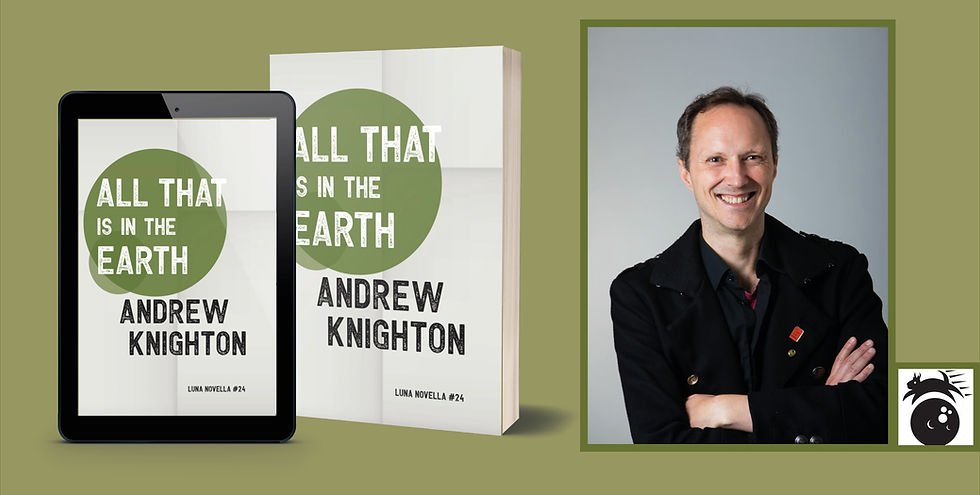
Novellas are meant to be compact little things, a swift punch of story that does the business and moves on. That’s how I’ve approached writing them in the past, building a world just big enough to serve my cast.
All That is in the Earth is different.
This story’s setting emerged twenty years ago, when my friend Dan and I were dreaming up a live roleplay game. The whole setting was themed around disease, from parasitic corporations to a gerontocracy obsessed with its leaders’ health. The game never happened but I loved the world building. Every few years, I’d stumble across my notes and think that I should do something with it.
A few years ago, I started taking that urge seriously. I wanted to write some scifi, and a global pandemic put disease in the forefront of my mind. I typed up my old notes and started expanding upon them, scribbling down thoughts on related themes like medicine, microbes, and how human bodies work. I binged episodes of Scrubs, browsed the biology shelves of second-hand bookshops, peered closely at artworks portraying doctors. Those notes expanded fast.
In his book Solutions for Writers, Sol Stein talks about the concept of the crucible – a space the characters are trapped within, unable to escape each other. It can be as literal as a speeding bus or as abstract as a toxic relationship, but it’s a valuable tool for containing a story. Fortunately, the game Dan and I had designed gave me a natural crucible. It was set on a planet overrun with zombie-like monsters caused by a disease. The rest of the universe blockaded the planet to contain this terrible infection, so the characters couldn’t leave. But the unique ecosystem behind that disease made the planet valuable, so outsiders sent research teams in, ensuring characters and competition.
When I wanted to write a story about facing death, that planet was the perfect location. Everyone there had been written off by the outside universe and none of them expected to survive. The contained environment would limit what I could put into the story, fitting the novella length.
That doesn’t mean I’ve abandoned the rest of that disease-inspired universe. The people in the story and the factions they represent all have disease as an inspiration, even if the connection isn’t obvious on the page. Clifford, the protagonist, comes from a gerontocratic culture obsessed with avoiding death. Two characters have bodies modified to incorporate other life forms, just as we all contain a multitude of microbes. Hyper-capitalist mercenaries and a brief appearance by a bloodthirsty space pirate reflect harmful forms of parasitism.
Are all those strands important to this story? Probably not. Are the connections clearly drawn on the page? Hell no. But did I make a conscious choice to keep them? Oh yes.
This stuff lets me hint at a larger, stranger universe, something that might look disjointed from the corner these characters are trapped in, but that has an underlying unity. A small story can be strengthened by being part of something bigger, as long as it stays complete in itself.
And with so many notes to work from, this setting has other stories to tell. It already featured in a short story in Bullet Points, and I expect I’ll be back to it another day. For now though, it’s a handful of survivors stuck in the crucible of a sickly planet, grappling with the prospect of death. That’s All That is in the Earth.
Order Andrew's novella here!


Comments